
Easy Homemade Garlic Bread
This easy homemade garlic bread is buttery, golden, and ready in minutes with simple ingredients you probably already have. It’s the perfect side for pasta night, soup, or any easy dinner the whole family will love.
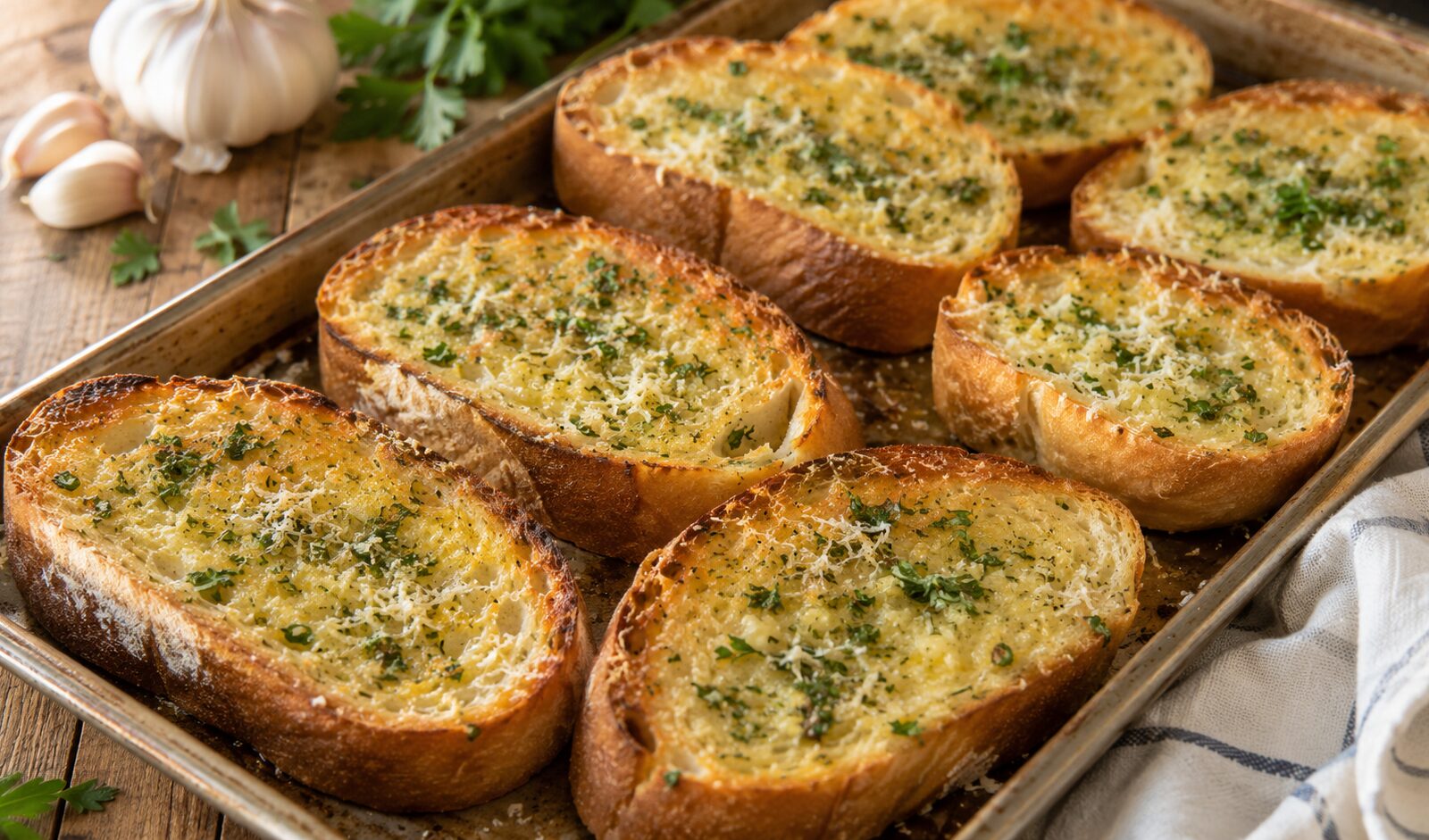
If you need a side dish that feels cozy, fast, and completely doable on a busy night, this easy homemade garlic bread is a great one to keep in your back pocket. It uses simple ingredients, comes together in minutes, and bakes up with a crisp edge and soft, buttery center that goes with almost anything.
This is the kind of recipe that makes weeknight meals feel more complete without adding stress. Serve it with chicken pasta, a big bowl of creamy pasta, soup, salad, or even leftover spaghetti, and dinner suddenly feels a little more special.
The best part is that you do not need anything fancy. A loaf of bread, butter, garlic, and a few pantry seasonings are enough to make garlic bread that tastes fresh, warm, and homemade.
Key Takeaways
- Ready in about 15–17 minutes using common pantry ingredients.
- Use softened butter for best spread and texture.
- Customize with cheese, herbs, or roasted garlic.
- Store leftovers in the fridge for up to 3 days or freeze for up to 2 months.
Why You’ll Love This Recipe
- It is fast enough for busy nights. You can make this easy homemade garlic bread in about 20 minutes from start to finish.
- It uses simple ingredients. No special grocery trip required; everything is common and budget-friendly.
- The texture is just right. The outside gets lightly crisp while the inside stays soft and tender.
- It pairs with almost any dinner. It works especially well with pasta, soup, roast chicken, and quick skillet meals.
- It is beginner-friendly. The steps are simple, forgiving, and easy to follow even if you do not cook often.
- It feels family-friendly. Kids and adults both tend to love buttery garlic bread, especially with cheesy pasta dishes.
- It is easy to scale. Make one loaf for a small family dinner or double it for guests and larger gatherings.
- It is easy to customize. You can make it cheesy, herby, extra garlicky, or lighter depending on what your family likes.
Ingredients
Here is what you need to make easy homemade garlic bread:
- 1 loaf French bread or Italian bread – A 12- to 16-ounce loaf works well. Choose a loaf with a sturdy crust and soft interior.
- 1/2 cup unsalted butter, softened – Soft butter mixes easily and spreads without tearing the bread.
- 3 to 4 cloves garlic, minced – Fresh garlic gives the best flavor. Use 3 cloves for mild garlic bread and 4 for a stronger flavor.
- 1 tablespoon chopped fresh parsley – Adds color and a fresh, balanced flavor.
- 1/2 teaspoon salt – Helps the garlic butter taste fuller and more savory.
- 1/4 teaspoon black pepper – Optional, but it adds a little warmth.
- 1/4 teaspoon garlic powder – Boosts the garlic flavor without adding more moisture.
- 2 tablespoons grated Parmesan cheese – Optional, but it adds a salty, savory finish.
- 1 to 2 tablespoons olive oil – Optional, for a slightly richer spread and extra browning.
- 1/4 teaspoon Italian seasoning – Optional, for a more herb-forward flavor.
Ingredient Notes
- Bread choice matters. French bread gives a crispier result, while Italian bread is usually a little softer.
- Use softened butter, not melted butter. Softened butter stays on the bread better and prevents the topping from sliding off.
- Fresh garlic makes a big difference. Garlic powder alone can work in a pinch, but fresh garlic gives the best homemade flavor.
- Parmesan is optional, but helpful. It adds a savory crust and makes the bread feel more like a restaurant-style side.
Optional Substitutions
- Use salted butter instead of unsalted butter. If you do, reduce or skip the added salt so the bread does not taste too salty.
- Swap fresh garlic for garlic powder. Use about 1 to 1 1/2 teaspoons garlic powder if that is what you have. The flavor will be a little less sharp and fresh, but still delicious.
- Use ciabatta or sourdough. These breads give a different texture: ciabatta is airy and chewy, sourdough adds a tangy flavor, and both work well for garlic bread.
- Leave out the Parmesan for a dairy-light version. The bread will still be flavorful, just a little less savory on top.
- Use dried parsley if needed. Use 1 teaspoon dried parsley instead of fresh. The flavor is milder and less bright, but it works in a pinch.
- Add a little mayo to the spread. A tablespoon of mayonnaise makes the topping extra creamy and helps browning, though it slightly changes the flavor.
- Use dairy-free butter. A plant-based butter substitute can work well if it is meant for spreading and baking.
- Make it extra garlicky with roasted garlic. Swap some or all of the fresh garlic for mashed roasted garlic for a sweeter, softer garlic flavor.
Instructions
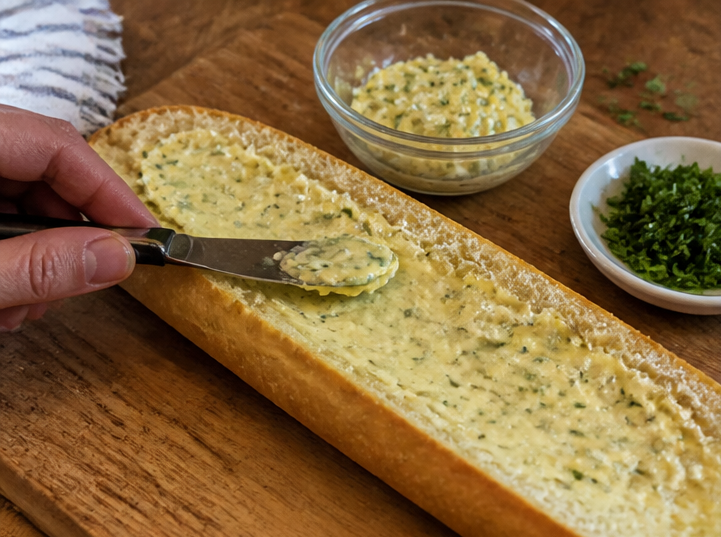
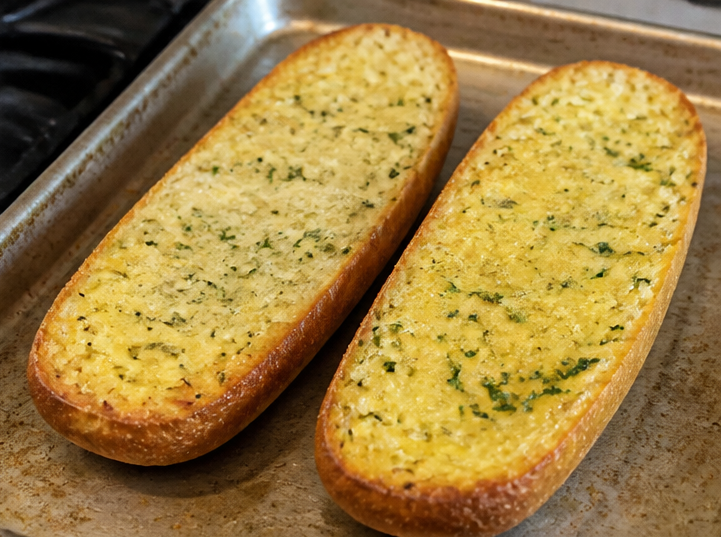
- Preheat the oven. Set your oven to 400°F. If you want a very crisp top, place the rack in the upper-middle position so the bread browns nicely without burning too quickly.
- Prepare the bread. Slice the loaf in half lengthwise. If the loaf is very wide, you can also cut each half into smaller pieces after baking, but keep the halves together while baking for easier handling.
- Mix the garlic butter. In a small bowl, combine the softened butter, minced garlic, parsley, salt, black pepper, garlic powder, and Parmesan if using. Stir until everything is evenly mixed. The butter should be spreadable and look well combined, not streaky.
- Add olive oil or seasoning if using. If you want a slightly softer, richer topping, stir in the olive oil. Add Italian seasoning if you like a more herb-heavy flavor.
- Spread the mixture evenly. Use a spoon or spatula to spread the garlic butter across the cut sides of the bread. Get all the way to the edges so every bite has flavor. Do not overload the center and leave the edges bare.
- Place the bread on a baking sheet. Put the bread halves cut-side up on a rimmed baking sheet. If you want a crispier bottom, set the bread directly on the sheet rather than lining it heavily with parchment.
- Bake until golden. Bake for 10 to 12 minutes, or until the butter is melted and the edges are starting to turn golden. The bread should smell fragrant and look glossy on top.
- Broil briefly for extra color, if needed. If you want a deeper golden finish, switch the oven to broil for 1 to 2 minutes at the end. Watch closely because garlic bread can go from golden to burnt very quickly.
- Slice and serve. Remove the bread from the oven and let it rest for 1 to 2 minutes. Slice into pieces and serve warm.
- Check for doneness. The bread is ready when the butter has melted into the crumb, the edges are lightly crisp, and the top is golden. If the bread is still pale, give it another minute or two.
Common Mistakes to Avoid
- Do not use butter that is too cold. Cold butter tears the bread and spreads unevenly.
- Do not burn the garlic. Garlic can become bitter if it browns too much, especially under the broiler.
- Do not skip the edges. A full edge-to-edge spread gives the best flavor and prevents dry bites.
- Do not overbake. Garlic bread is best when the center is still soft and the outside is just crisp.
Pro Tips
- Let the butter soften naturally. Room-temperature butter spreads much better than microwaved butter, which can separate or become oily.
- Mince the garlic very finely. Large pieces can brown too fast and taste sharp. A fine mince gives the spread better texture and even flavor.
- Toast the cut sides for a firmer base if desired. If your bread is very soft, bake the halves plain for 2 to 3 minutes before adding the butter, then finish baking. This helps keep the bread from getting soggy.
- Use fresh parsley for the brightest flavor. It adds freshness that balances the richness of the butter.
- Watch the edges near the end. The outer crust browns first, so check early if your loaf is thin or your oven runs hot.
- Serve it right away for best texture. Garlic bread is at its best when warm from the oven and the butter is still melted.
- Use a serrated knife for slicing. It cuts through the crust without squishing the loaf.
- If adding cheese, keep it light. Too much cheese can block browning and make the top greasy instead of crisp.
Variations and Substitutions
- Cheesy garlic bread. Add shredded mozzarella or a blend of mozzarella and Parmesan on top during the last 3 to 4 minutes of baking. This makes it extra gooey and kid-friendly.
- Garlic herb bread. Add a little dried oregano, basil, or Italian seasoning for a more herby, pizza-style flavor.
- Spicy garlic bread. Add a pinch of red pepper flakes or a little cayenne to the butter for a subtle kick.
- Lighter garlic bread. Use less butter and add a small amount of olive oil to stretch the spread while still keeping flavor.
- Restaurant-style garlic bread. Mix in a tablespoon of grated Parmesan and a teaspoon of olive oil, then broil briefly at the end for a golden top.
- Roasted garlic version. Mash roasted garlic into the butter for a mellow, sweeter flavor that feels extra cozy with creamy pasta or soup.
- Garlic bread sticks. Slice the loaf into strips before baking for easy dipping and serving with marinara or pasta sauce.
- Open-faced garlic toast. Bake the halved loaf, then cut into smaller pieces for serving with salad, soup, or as a snack.
Storage and Reheating
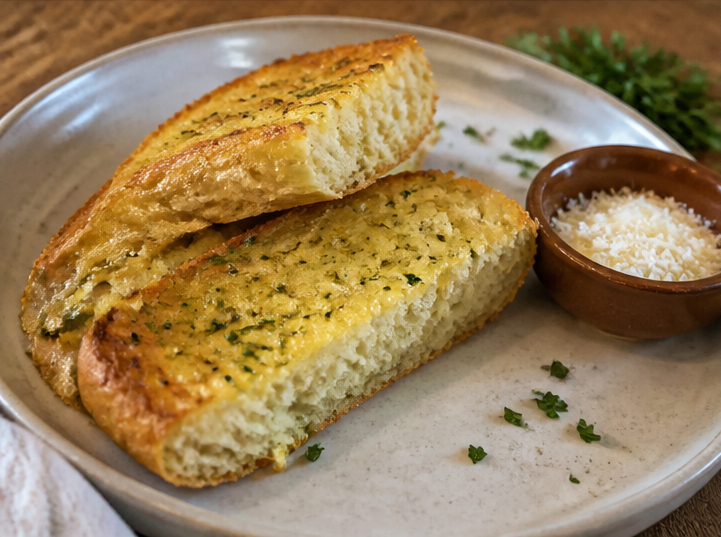
Fridge
Store leftover garlic bread in an airtight container or wrap it tightly in foil. It will keep in the refrigerator for up to 3 days. For best texture, let it cool completely before storing so condensation does not make the bread soggy. If the bread has already been sliced, place parchment between layers so the pieces do not stick together.
Freezer
Garlic bread freezes well, especially if you want to prep it ahead for a busy weeknight meal. Wrap the baked or unbaked garlic bread tightly in plastic wrap, then place it in a freezer bag or airtight container. It can be frozen for up to 2 months. For best results, freeze the loaf in halves or in pre-sliced pieces. That makes it easier to pull out only what you need. If freezing unbaked garlic bread, assemble it first and freeze it flat on a tray until firm before wrapping. Bake from frozen, adding a few extra minutes to the cooking time.
Reheating
Reheat garlic bread in the oven at 350°F for about 8 to 10 minutes, or until warm through and crisp again. If it is already sliced, check earlier so it does not dry out. You can also reheat individual pieces in an air fryer at 325°F for 3 to 5 minutes. This is a great option when you only need a small amount. Avoid the microwave if possible. It warms the bread quickly, but it usually makes the crust soft and chewy instead of crisp.
FAQ
Can I make this easy homemade garlic bread ahead of time? Yes. You can mix the garlic butter a day or two ahead and store it in the fridge. You can also assemble the bread ahead, wrap it tightly, and refrigerate it until you are ready to bake.
What bread is best for garlic bread? French bread is the most classic choice because it gives you a crisp outside and soft inside. Italian bread, ciabatta, and sourdough also work well depending on the texture you like.
Can I use garlic powder instead of fresh garlic? Yes, you can. Use about 1 to 1 1/2 teaspoons garlic powder in place of the fresh garlic. The flavor will be slightly less fresh and more mellow, but it still works well for a quick dinner side.
How do I keep garlic bread from getting soggy? Use softened, not melted, butter and avoid adding too much topping. Baking the bread cut-side up on a rimmed sheet also helps the bottom stay firm. If your bread is very soft, lightly toast it before adding the butter.
Can I make it cheesy? Absolutely. Add mozzarella, Parmesan, or a blend of both near the end of baking. Just do not overload the top or it can get greasy instead of crisp.
What should I serve with garlic bread? It goes well with chicken pasta, creamy pasta, tomato-based pasta, soups, casseroles, salad, and simple skillet dinners. It is especially nice with meals that have a sauce to soak up.
Can I freeze garlic bread before baking? Yes. Assemble it, wrap it tightly, and freeze it. When you are ready to bake, place it in the oven from frozen and add a few extra minutes until the butter melts and the edges turn golden.
Why does my garlic bread taste bitter? The garlic may have browned too much. Garlic burns quickly, especially under the broiler. Keep a close eye on it and only broil for a short time if needed.
More Ideas
Looking for other easy sides? Try our homemade breadsticks or quick roasted vegetables. For main dishes, check out creamy garlic pasta or one-pan chicken and rice.
Nutrition Information
Nutritional values are estimated and can vary depending on the ingredients used.
Save this recipe
Print and download options unlock in 30 seconds.
