
Crispy Chili Crisp Cabbage Noodle Skillet
This crispy chili crisp cabbage noodle skillet is a quick, one-pan dinner that’s packed with flavor and ready in under 30 minutes. Perfect for busy weeknights when you need something satisfying without a lot of fuss.
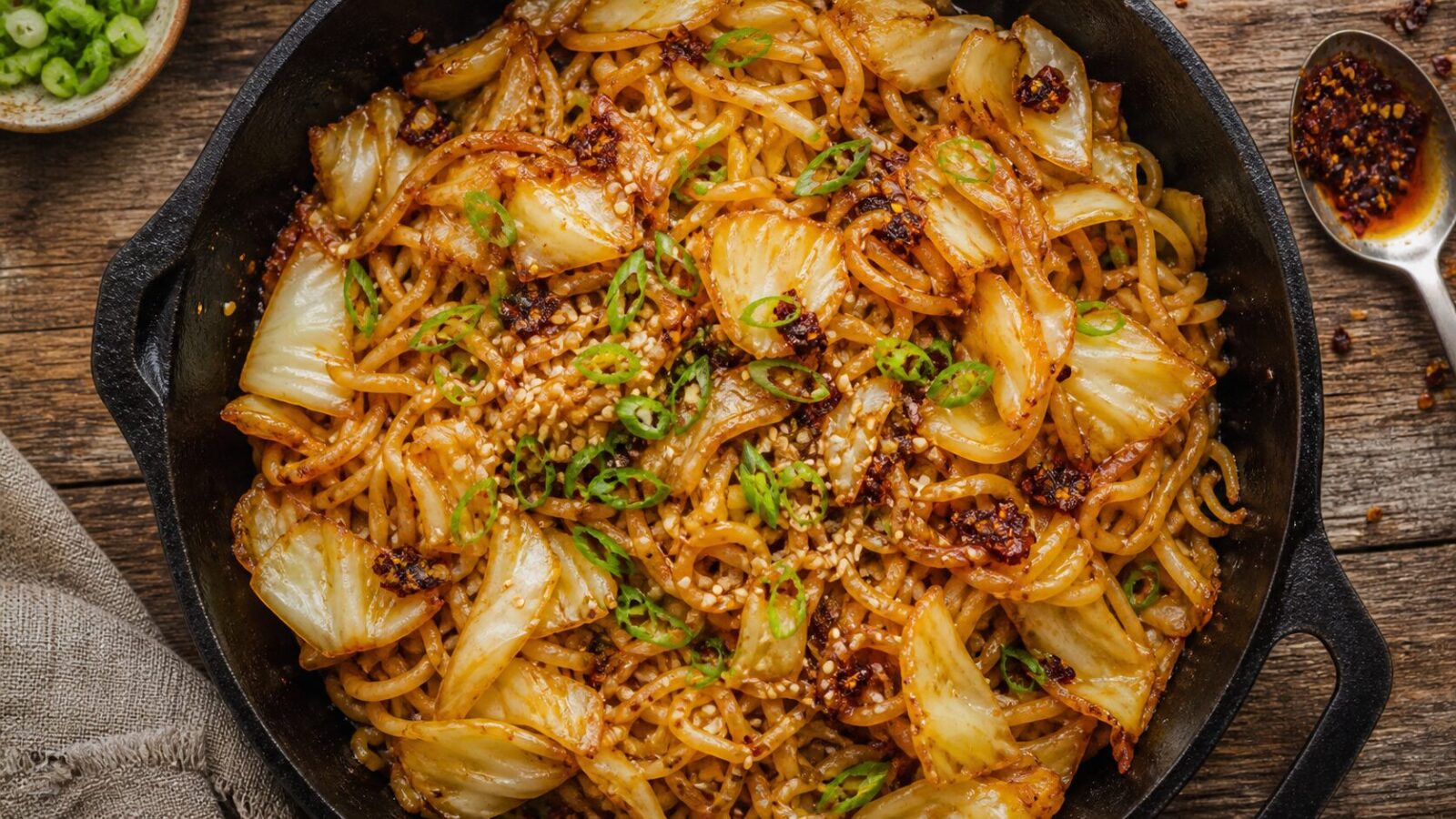
This chili crisp cabbage noodle skillet is the kind of dinner you make when you want something fast, flavorful, and satisfying without a ton of effort. It comes together in one skillet, uses affordable ingredients you might already have on hand, and delivers a crispy, spicy, savory result that the whole family will love.
If you’re looking for a cabbage noodle stir fry that feels like a treat but is totally doable on a busy Tuesday night, this recipe is for you. The combination of tender noodles, caramelized cabbage, and the addictive kick of chili crisp creates a dish that’s both comforting and exciting.
Best of all, this budget skillet dinner proves that simple ingredients can be absolutely delicious. It’s naturally vegetarian, can be made vegan with a quick swap, and scales easily to feed a crowd—or just yourself.
This is the perfect answer to the “What’s for dinner?” question when you’re short on time and energy but still want something homemade.
Why You'll Love This Recipe
- Ready in 20 minutes – From start to finish, this cabbage noodle stir fry is on the table faster than takeout delivery.
- One skillet, minimal cleanup – Everything cooks in a single pan, so you spend less time washing dishes and more time enjoying your meal.
- Crispy texture everyone loves – The cabbage gets beautifully caramelized and slightly crispy, while the noodles stay tender. The chili crisp adds an extra layer of crunch.
- Budget-friendly ingredients – Cabbage, noodles, and chili crisp are all very affordable. This is a dinner that feeds a family for just a few dollars.
- Customizable heat and flavor – You can add protein, switch up the veggies, or dial up or down the spice to suit your family’s tastes.
- Great for meal prep – This chili crisp noodle recipe reheats beautifully, so you can make extra for lunch the next day.
- Beginner-friendly – No fancy techniques or hard-to-find ingredients. If you can stir and boil water, you can make this chili crisp cabbage noodle skillet.
- Family-approved – The mild sweetness of cabbage pairs perfectly with the savory, slightly spicy chili crisp. Even picky eaters tend to go back for seconds.
Ingredients
- 8 oz dried ramen or lo mein noodles – Discard the seasoning packet. Ramen noodles get perfectly tender, but lo mein or udon noodles work too.
- 2 tablespoons vegetable oil – Divided. Use a neutral oil with a high smoke point.
- 1 small head green cabbage (about 1.5 lbs) – Cut into 1-inch pieces. The flat sides will caramelize beautifully.
- 4 cloves garlic – Thinly sliced. Fresh garlic gives the best flavor.
- 1 tablespoon fresh ginger – Grated or finely minced. Adds warmth and depth.
- 3 tablespoons chili crisp – Use your favorite brand. Lao Gan Ma is classic, but any chili crisp with crunchy bits works. Adjust to taste.
- 2 tablespoons soy sauce – Use tamari or coconut aminos for gluten-free.
- 1 tablespoon rice vinegar – Adds brightness. Unseasoned is preferred.
- 1 teaspoon sugar – Balances the heat. Brown sugar or honey work too.
- 2 green onions – Sliced, for garnish.
- 1 tablespoon toasted sesame seeds – Optional, for garnish.
- Salt and white pepper to taste – White pepper keeps the color light, but black pepper is fine.
Optional Substitutions
- Noodles – Use rice noodles for a gluten-free version, or swap in zucchini noodles for a low-carb option. Cooking times will vary.
- Chili crisp – If you don’t have chili crisp, use 2 tablespoons of chili oil plus 1 tablespoon of crushed red pepper flakes. The texture will be less crunchy but still flavorful.
- Soy sauce – Use tamari or coconut aminos for a gluten-free or soy-free alternative.
- Cabbage – Savoy or Napa cabbage work well. Red cabbage will turn the dish pink but tastes similar.
- Protein – Add 8 oz of cubed firm tofu, cooked chicken, or shrimp in step 4 before cooking the cabbage.
- Vegetables – Add shredded carrots, bell pepper strips, or snow peas along with the cabbage for more color and nutrients.
- Sweetener – Maple syrup or agave can replace the sugar. Start with 1 teaspoon and adjust.
- Low-sodium – Use low-sodium soy sauce and reduce added salt. Chili crisp is already savory.
Instructions
- Cook the noodles according to package directions until al dente. Drain and rinse with cold water to stop cooking. Toss with a few drops of oil to prevent sticking. Set aside.
- While the noodles cook, prepare the cabbage. Cut the cabbage in half through the core, then into wedges, then crosswise into 1-inch pieces. You want flat surfaces for browning.
- Heat 1 tablespoon of oil in a large nonstick or cast-iron skillet over medium-high heat until shimmering. Add the cabbage in a single layer (work in batches if needed). Cook undisturbed for 3–4 minutes until the bottom is deeply golden and charred in spots.
- Stir the cabbage and continue cooking for another 2–3 minutes, stirring occasionally, until most pieces are tender and caramelized. Transfer to a plate.
- Reduce heat to medium and add the remaining 1 tablespoon of oil. Add the sliced garlic and grated ginger. Cook for 30 seconds until fragrant, stirring constantly to avoid burning.
- Add the chili crisp to the skillet. Stir and cook for 15 seconds to bloom the flavor.
- Add the cooked noodles to the skillet and toss to coat in the chili crisp mixture. Cook for 1–2 minutes, allowing the noodles to get slightly crispy in spots.
- Return the caramelized cabbage to the skillet. Add the soy sauce, rice vinegar, and sugar. Toss everything together and cook for 1 minute until heated through.
- Taste and adjust seasoning – Add salt and white pepper if needed. If you want more heat, add extra chili crisp.
- Remove from heat. Garnish with sliced green onions and toasted sesame seeds. Serve immediately directly from the skillet for a fun family-style presentation.
Pro Tips
- Don’t overcrowd the skillet when browning the cabbage. If you crowd the pan, the cabbage will steam instead of caramelize. Work in two batches if necessary.
- Use high heat for browning – Medium-high to high heat gives you that deep char quickly. Lower heat won’t produce the same caramelization.
- Rinse the cooked noodles with cold water to remove excess starch and prevent them from clumping together.
- Add the chili crisp at the right time – Blooming it in the oil after the aromatics releases its full flavor. Don’t add it too early or it may burn.
- Taste as you go – Chili crisp brands vary in salt and spice levels. Start with 2 tablespoons and add more at the end if you want more heat.
- Use a cast-iron skillet if you have one – It holds heat better and creates a superior crust on the cabbage.
- Slice garlic thinly rather than mincing – Thin slices caramelize nicely and won’t burn as easily as minced garlic when cooking with chili crisp.
- Make it a complete meal – Add a fried egg on top for extra protein and richness. The runny yolk acts as a sauce.
- Let the cabbage rest after cutting – If you have time, let the cut cabbage sit for 5–10 minutes. This draws out a bit of moisture, helping it brown faster.
- Double the sauce if you like extra saucy noodles – Simply whisk together an extra tablespoon each of soy sauce, rice vinegar, and chili crisp, and add it with the rest.
Variations and Substitutions
- Add protein – Pan-sear 8 oz of cubed firm tofu, sliced chicken breast, or shrimp before cooking the cabbage. Set aside and stir back in at the end.
- Make it a full veggie stir-fry – Add 1 cup of shredded carrots, 1 red bell pepper sliced, and a handful of snow peas along with the cabbage. Adjust cooking time as needed.
- Use different noodles – Thick udon noodles, soba noodles, or even spaghetti can work. Cook them slightly less than al dente because they’ll cook more in the skillet.
- Go gluten-free – Use rice noodles or 100% buckwheat soba noodles and tamari instead of soy sauce. Check that your chili crisp is gluten-free.
- Milder version for kids – Use only 1 tablespoon of chili crisp and add a teaspoon of sesame oil for flavor. You can also replace chili crisp with a mixture of soy sauce and a pinch of red pepper flakes.
- Add crunch – Toss in a handful of roasted peanuts or cashews at the end for extra texture.
- Make it creamy – Stir in 2 tablespoons of peanut butter or tahini along with the soy sauce for a creamy, nutty sauce.
- Extra vegetables – Add shredded Brussels sprouts or broccoli slaw instead of cabbage for a twist.
- Spicy peanut version – Omit the sugar and add 2 tablespoons of peanut butter, 1 teaspoon of sriracha, and a splash of lime juice.
- Leftover roast chicken – Shred leftover chicken and stir it in at the end. This is a great way to use up leftovers.
Storage and Reheating
Fridge
Store leftovers in an airtight container in the refrigerator for up to 3 days. The cabbage may soften slightly but the flavors will meld beautifully.
Freezer
This noodle skillet freezes well for up to 2 months. Cool completely, then transfer to a freezer-safe container or zip-top bag. Thaw overnight in the refrigerator before reheating.
Reheating
For best results, reheat in a skillet over medium-high heat with a splash of water or soy sauce to refresh the noodles. Stir-fry for 2–3 minutes until hot and slightly crispy again. You can also microwave in 30-second bursts, but the cabbage will be softer.
FAQ
Can I use any type of cabbage? Yes! Green cabbage is classic, but savoy, Napa, or red cabbage all work. Red cabbage will turn the dish a bit pink, but the flavor is similar.
Is chili crisp very spicy? Chili crisp has moderate heat that varies by brand. Start with 2 tablespoons for a mild-to-medium spice level, and add more to taste. You can also use less for a milder version.
Can I make this ahead of time? You can prep all the ingredients ahead: chop the cabbage, slice garlic and ginger, and cook the noodles. Store separately in the fridge. When ready to eat, the cooking process takes just 10 minutes.
What can I use instead of chili crisp? If you don’t have chili crisp, use 2 tablespoons of chili oil plus 1 teaspoon of red pepper flakes. The texture will be less crunchy but still delicious.
How do I prevent the noodles from sticking together? Rinse cooked noodles under cold water and toss with a little oil. Also, make sure you cook the noodles only until al dente—overcooked noodles get sticky.
Can I add meat to this dish? Absolutely! Pan-sear sliced chicken, beef, pork, or shrimp before cooking the cabbage, then set aside and stir back in at the end. Tofu or tempeh also work well.
Is this recipe gluten-free? Use gluten-free noodles (like rice noodles or 100% buckwheat soba) and tamari instead of soy sauce. Check that your chili crisp is gluten-free, as some brands contain wheat.
Why is my cabbage not getting crispy? Make sure your skillet is hot enough (medium-high heat) and don’t overcrowd the pan. Cook in batches if needed, and let the cabbage sit undisturbed for a few minutes to develop a deep golden crust.
Nutrition Information
Nutritional values are estimated and can vary depending on the ingredients used.
Save this recipe
Print and download options unlock in 30 seconds.
