
Meal Prep Miso Ginger Chicken Noodle Jars
These meal prep miso ginger chicken noodle jars are a warm, comforting winter lunch that comes together in just 20 minutes. Layer the ingredients in a jar, pour hot water, and enjoy a flavorful broth instantly.
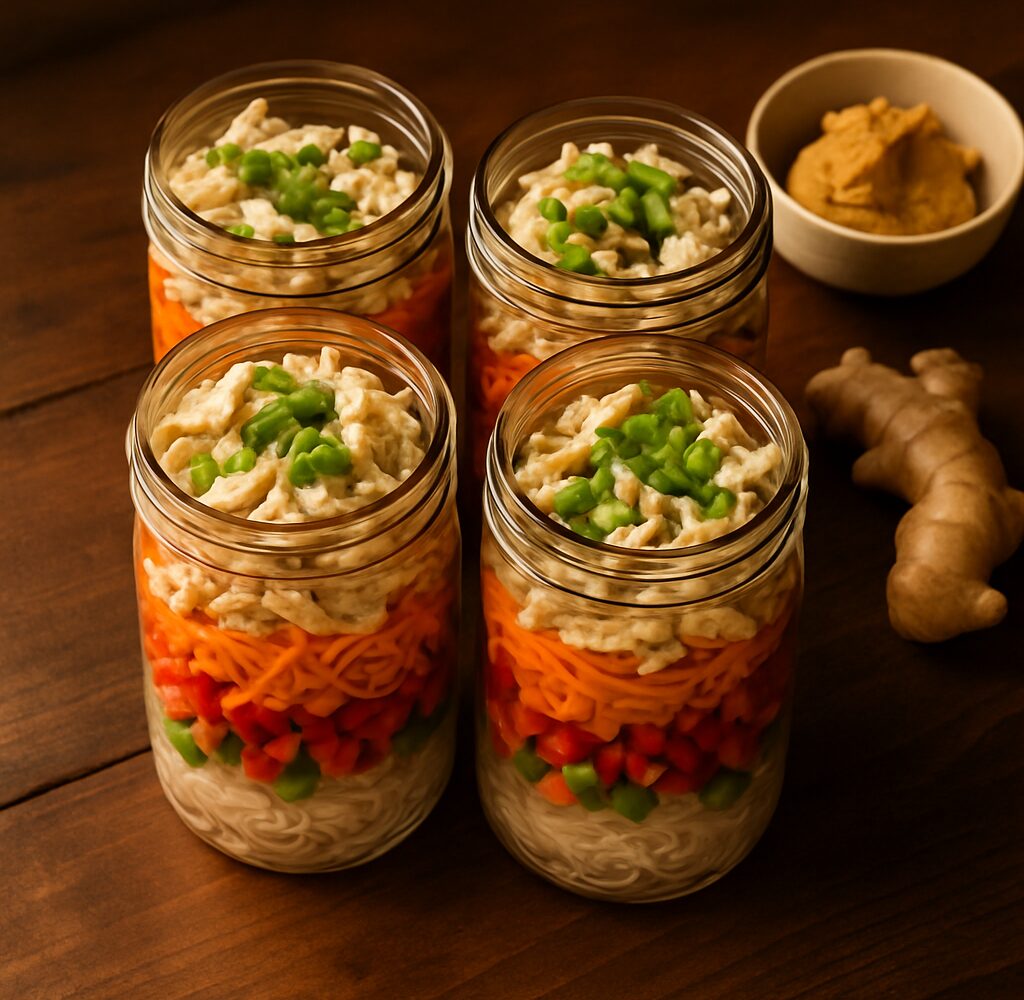
When winter hits and the days get shorter, a warm, soothing lunch becomes the highlight of my afternoon. But who has time to cook a full meal in the middle of a busy day? That’s where these meal prep miso ginger chicken noodle jars come in. They’re like a hug in a jar—cozy, nourishing, and ready in the time it takes to boil water.
I love making a batch on Sunday evening, then grabbing one each morning on my way out the door. At lunchtime, I just add hot water, let it steep for a few minutes, and boom—a steaming bowl of miso ginger chicken noodle soup appears. No microwave required, no fuss. Just pure comfort.
This recipe is designed for real life: minimal ingredients, maximum flavor, and zero stress. Whether you’re packing lunch for work, school, or a day at home, these jars will keep you warm and satisfied all winter long.
Why You'll Love This Recipe
- Ready in 20 minutes: From start to finish, you can have a week’s worth of lunches prepped in under half an hour.
- No reheating needed: Just add boiling water—perfect for offices, picnics, or anywhere without a microwave.
- Deep umami flavor: Miso and ginger create a rich, savory broth that tastes like it simmered for hours.
- Customizable to your pantry: Use whatever veggies, noodles, or protein you have on hand.
- Beginner-friendly: If you can boil water and chop a few veggies, you can make these jars.
- Budget-friendly: Uses affordable ingredients like chicken thighs, rice noodles, and basic produce.
- Portable and mess-free: Layer everything in a mason jar, screw on the lid, and go.
- Perfect for winter meal prep: Warm, comforting, and packed with immune-boosting ginger and garlic.
Ingredients
- 4 cups low-sodium chicken broth – or use vegetable broth for a lighter flavor.
- 3 tablespoons white miso paste – white miso is milder and pairs beautifully with ginger.
- 2 tablespoons soy sauce – or tamari for gluten-free.
- 1 tablespoon sesame oil – adds a nutty aroma.
- 1 tablespoon grated fresh ginger – about a 2-inch piece, peeled.
- 3 cloves garlic, minced – or 1 teaspoon garlic powder in a pinch.
- 2 boneless, skinless chicken breasts (about 1 lb) – cooked and shredded. You can use leftover rotisserie chicken.
- 4 ounces rice noodles – or soba noodles, udon, or even spaghetti.
- 2 large carrots, julienned or thinly sliced – for crunch and sweetness.
- 1 red bell pepper, thinly sliced – adds color and vitamin C.
- 4 green onions, sliced – white and green parts separated.
- ¼ cup fresh cilantro, chopped – optional but brightens the broth.
- 1 tablespoon sesame seeds – for garnish.
- 4 (16-ounce) wide-mouth mason jars – or any heat-safe jar with a tight lid.
- Boiling water – added just before serving.
Optional Substitutions
- Chicken: Swap with cooked shrimp, tofu, or shredded pork. For a vegetarian version, use extra firm tofu and vegetable broth.
- Noodles: Substitute with zucchini noodles (zoodles) for a low-carb option, or use cooked quinoa for extra protein.
- Miso: Red miso is stronger and saltier; use 2 tablespoons instead of 3. Chickpea miso works for soy-free.
- Soy sauce: Use coconut aminos or tamari for gluten-free or low-sodium.
- Veggies: Add snow peas, bok choy, spinach, or mushrooms. Root vegetables like sweet potato also work well.
- Ginger: Use 1 teaspoon ground ginger if fresh isn’t available, but fresh is best.
- Broth: Use dashi for an authentic Japanese flavor, or simply use water with extra miso.
Instructions
- Cook the chicken: Place chicken breasts in a small pot and cover with water. Bring to a boil, then reduce heat and simmer for 12–15 minutes, until fully cooked (internal temp 165°F). Remove, let cool slightly, then shred with two forks. Alternatively, use leftover rotisserie chicken.
- Cook the noodles: While chicken cooks, prepare rice noodles according to package directions. Usually, soak in hot water for 5–7 minutes until tender. Drain and rinse under cold water to stop cooking. Set aside.
- Prepare the broth base: In a small bowl, whisk together miso paste, soy sauce, sesame oil, grated ginger, and minced garlic until smooth. This concentrated base will be divided among the jars.
- Layer the jars: To each 16-ounce mason jar, add in this order:
- 1 tablespoon of the miso-ginger paste (adjust to taste)
- ½ shredded chicken
- ¼ cup carrots
- ¼ cup red bell pepper
- ¼ cooked rice noodles
- White parts of green onions
- A sprinkle of cilantro if using
- A pinch of sesame seeds
- Seal and store: Screw the lids on tightly. Refrigerate jars for up to 5 days. When ready to eat, remove the lid and fill the jar with boiling water (leave about ½ inch headspace). Stir gently with a fork to dissolve the miso paste.
- Steep: Let the jar sit for 3–5 minutes, covered loosely with a plate or lid, until the noodles and chicken are heated through and the broth is fragrant.
- Garnish and enjoy: Top with green onion greens and extra cilantro or sesame seeds if desired. Eat directly from the jar or pour into a bowl.
Pro Tips
- Layer wisely: Keep the miso paste at the bottom so it dissolves easily when hot water is added. Dry or grainy ingredients (like noodles) should be in the middle, and delicate herbs on top.
- Use wide-mouth jars: Makes layering and eating much easier. Regular mouth jars work but can be messy.
- Keep noodles separate if storing long-term: If prepping more than 3 days ahead, store noodles in a separate container to prevent them from absorbing too much liquid and turning mushy.
- Boil water fresh: For best results, use just-boiled water straight from the kettle. Water that’s been sitting in a thermos for hours won’t be hot enough to cook the ingredients.
- Adjust miso to taste: Miso brands vary in saltiness. Start with 1 tablespoon per jar, then add more if needed after tasting.
- Double the batch: These jars freeze well too (see storage notes), so make extra for busy weeks.
- Don’t overcook chicken: Simmer gently—boiling makes it tough. Let it rest before shredding for the juiciest texture.
Variations and Substitutions
- Spicy miso ginger: Add 1 teaspoon sriracha or chili garlic sauce to the broth base for a kick.
- Coconut miso broth: Substitute 1 cup of broth with canned coconut milk for a creamy, tropical twist.
- Vegetarian/vegan: Use vegetable broth, replace chicken with crispy tofu or edamame, and use a vegan miso (most are, but check).
- Low-carb: Swap rice noodles for shirataki noodles or spiralized zucchini. Add extra veggies like bean sprouts.
- Extra protein: Add a soft-boiled egg or sliced leftover steak on top before pouring hot water.
- Seasonal veggies: In fall, add roasted butternut squash; in spring, asparagus and peas.
- Soba noodle jars: Use buckwheat soba noodles for a nuttier flavor and extra fiber. Cook according to package directions before layering.
Storage and Reheating
Fridge
Assembled jars can be stored in the refrigerator for up to 5 days. Keep the lids tightly sealed to prevent the ingredients from drying out. For best texture, store cooked noodles separately if making more than 3 days ahead—combine them when ready to eat. The miso paste base can also be prepared in advance and refrigerated in a small container for up to a week.
Freezer
These jars are freezer-friendly for up to 3 months. Assemble jars without the noodles (which get mushy when frozen and reheated). Use freezer-safe jars or containers, leaving about 1 inch of headspace for expansion. To serve, thaw overnight in the fridge, add freshly cooked noodles, then pour boiling water as directed.
Reheating
The beauty of this recipe is that no traditional reheating is needed. Simply pour boiling water over the ingredients and let steep for 3–5 minutes. If you prefer a microwave, transfer the jar’s contents to a microwave-safe bowl, add hot water, and microwave on high for 1–2 minutes. Stir well before eating.
FAQ
Can I use a different type of miso? Yes! White miso (shiro miso) is mild and best for this recipe, but red miso (aka miso) is stronger and saltier. If using red miso, reduce the amount to about 2 tablespoons total for all jars and decrease soy sauce slightly.
Can I make these jars without noodles? Absolutely. Omit the noodles and add extra veggies or a handful of baby spinach. The broth will still be delicious and satisfying.
How do I prevent the noodles from getting mushy? Store noodles separately if making more than 2 days ahead, or undercook them slightly by 1 minute so they finish cooking in the hot water.
Is it safe to eat cold? These are intended to be served hot, but the ingredients are fully cooked, so they are safe to eat cold if you prefer. However, the flavors bloom best with hot water.
Can I use raw chicken? No, always use fully cooked chicken. The boiling water is not hot enough to cook raw chicken safely.
What if I don’t have wide-mouth mason jars? Use any heat-safe microwave-safe container with a lid. Tempered glass or BPA-free plastic work well. Just be sure to leave headspace for the hot water.
How can I make this gluten-free? Use tamari or coconut aminos instead of soy sauce, and choose rice noodles or gluten-free soba noodles. Check that your miso is labeled gluten-free (some contain barley).
Can I double the recipe? Yes, simply multiply the ingredients by the number of jars you want. The broth base keeps well for up to a week in the fridge.
Nutrition Information
Nutritional values are estimated and can vary depending on the ingredients used.
Save this recipe
Print and download options unlock in 30 seconds.
